
Betting Shop Decline and What It Means for the Tote’s Future in UK Racing
 Available in US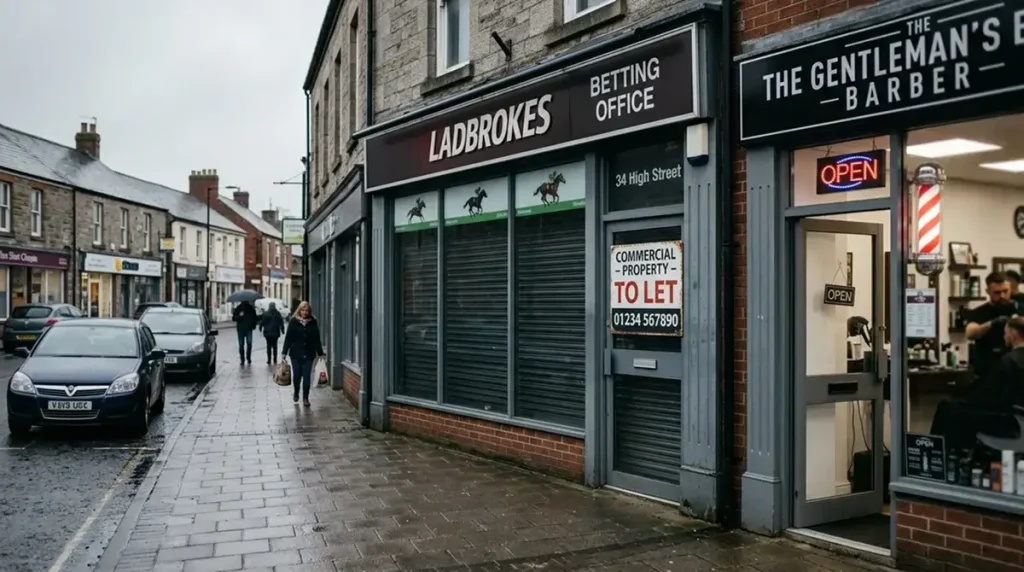
html
Contents
The high street that used to be racing’s home
When I started betting seriously, my local high street had four betting shops within a five-minute walk. Two of them had Tote terminals in addition to fixed-odds counters, which meant a Trifecta on a Saturday afternoon involved walking through the door, queueing behind a few regulars, scribbling a slip on the bench beside the form-board, and handing it across with cash. Three of those four shops are now closed – one is a barber, one is a vape store, one is empty. The fourth has a fixed-odds counter but no Tote terminal, because the operator dropped the Tote installation when the business case for the equipment fell below the threshold.
That’s not a sentimental anecdote. It’s the texture of a structural shift in how British racing’s customer base interacts with the sport, and the shift carries direct consequences for Tote pool liquidity, Trifecta dividend distribution, and the future of pool betting as a meaningful product category. This piece walks through the data, the cause, and the practical implications for any punter whose Trifecta strategy depends on what the pools look like in 2026 and beyond.
The retail Tote’s history
The Tote operated through a network of dedicated on-course tills and a parallel network of betting-shop terminals for decades. The shop terminals fed retail stakes into the same pools as on-course betting, with the integration handled invisibly to the customer – you walked in, placed a Trifecta at the shop counter, and the stake routed into the Tote pool alongside on-course money to settle at the published dividend after the race. The model worked because the betting-shop network was dense enough to provide near-universal physical access to Tote betting across the UK, with the shops absorbing the customer-service and float-management costs that the Tote itself couldn’t have funded directly.
The peak betting-shop count exceeded 8,000 in the early 2000s. The trajectory since has been downwards, with the £2 stake cap on fixed-odds betting terminals in 2019 accelerating closures that had already started, the pandemic further compressing margins, and the persistent shift to online betting hollowing out the customer base that had supported the retail model. The current figure of 5,825 licensed betting shops in the UK represents a 22.8% decline from the pre-pandemic count. The decline hasn’t stabilised – independent industry forecasts suggest further compression through 2026 and 2027 as operators consolidate retail estate and exit marginal locations.
The online shift
The shift to online betting has been substantial but not as comprehensive as the headline-dominant operators sometimes suggest. Total remote gross gambling yield in 2026-25 reached £2.6bn, with football contributing £1.3bn and racing £766.7m. That’s a significant online customer base, but it sits alongside continuing retail revenue, on-course handle, and a thinner but still material Tote-specific online product through dedicated channels. The mix has tilted online – perhaps 75% of British racing turnover now flows through online channels, against 40-45% a decade ago – but the retail residual remains commercially significant for the Tote architecture.
The structural problem is that the online shift has been uneven across betting products. Fixed-odds betting, with its instant-price settlement model, transferred to online seamlessly – the customer experience of placing a £10 win bet at 4/1 is functionally identical at a shop counter and on a phone app. Pool betting transferred less seamlessly. The Tote pool requires a window in which stakes accumulate before settlement, the dividend isn’t known until after the race, and the customer interaction involves placing the bet then waiting for the published dividend – a journey that the online interfaces have only recently rendered as intuitively as the shop counter did. The result is that pool betting’s online share has lagged the broader online migration, with retail Tote handle representing a disproportionate share of total Tote turnover even now.
Online racing turnover fell by £1.6bn between 2022 and 2026, with Q3 2026 showing turnover down 4.2% year-on-year and 12.8% against 2023. Per-race turnover declines ran steeper at -5.8% year-on-year and -11.4% over the two-year window. The decline isn’t only a retail-versus-online story – the whole channel has been thinning.
Consequences for the pools
Thinner pool liquidity has direct effects on Trifecta dividend distribution. Pools that would have been deep on a Saturday in 2018 are noticeably thinner in 2026, even on cards with comparable race quality. The thinness reduces the upside on rare-outcome dividends, because the pool’s net redistribution amount after the 25% UK Tote pool deduction is smaller, and the absolute dividend on any given winning combination scales with the pool size.
The Tote-beats-SP frequency in the pre-Tote+ baseline ran at around 30% across normal British fixtures, lifting to 54% under the Tote+ feature where it applies. The figures both reflect pool-depth effects – when the pool is thin, the redistribution to winning tickets struggles to exceed the equivalent fixed-odds settlement, and when the pool is deep (as it is on Tote+ days and World Pool days, with £541m staked across 17 World Pool days in 2022 alone), the redistribution mechanism produces dividends that consistently outpace bookmaker settlement.
The Trifecta-specific picture is more nuanced. The 1,011-race study showing the Tote Trifecta beats the Tricast 80% of the time, with an average outperformance of around 26%, draws on a sample period that includes both deep and thinner pool fixtures. The outperformance is consistent, but the absolute scale of the advantage has been narrowing on cards where the pool depth has been most affected by the shop closures and the broader online turnover slippage. The picture isn’t bleak – it’s structurally tighter than it was, and it requires more selective bet placement to maintain expected value.
The outlook for the Tote
The Tote’s future depends on three things – the continued integration of online pool-betting interfaces with the customer experience expectations set by fixed-odds operators, the structural reinforcement provided by World Pool commingling on prestige fixtures, and the ability of the underlying betting public to maintain pool participation through a period of regulatory pressure and turnover decline. The picture across the three is mixed. The interface improvements have come quickly – modern online Tote experiences are materially better than the early-2020s equivalents and the gap to fixed-odds online betting has narrowed substantially.
The commingling reinforcement is real and growing. World Pool fixtures lift Tote pool liquidity on the most-watched cards of the calendar, with the Tote+ feature extending the structural improvement to many more meetings. The pre-Tote+ Tote-beats-SP frequency of 30% lifting to 54% under the feature is a direct measure of how much the architectural improvements have added to the pool’s competitiveness.
The pool participation question is the hardest. The retail decline removes both customer-acquisition and customer-retention channels that no online product has yet fully replaced, and the wider turnover slippage in racing – driven by affordability checks, the upcoming 21% to 40% RGD jump from April 2026, and the broader retail-to-online structural shift – compounds the pressure on pool liquidity. The fundamental product is sound. The customer base is under sustained pressure. The medium-term picture for the Tote depends on whether the architectural improvements outpace the customer-base attrition over the next three to five years. For the wider context of how the Tote’s pool architecture and the feature set built around it have evolved alongside these pressures, the breakdown of Tote+ and World Pool mechanics for UK Trifecta punters walks through the technical picture in detail.
What the shop closures mean for the disciplined punter
The disciplined punter’s response to the retail decline isn’t sentimental – it’s practical. Tote pool liquidity matters more than ever for Trifecta dividend distribution, and the cards where pool depth remains reliably substantial are increasingly the cards worth concentrating bankroll on. World Pool fixtures, Tote+ days, the major Saturday handicaps, and the prestige festivals are where the structural advantages of pool betting remain at full strength. Routine midweek cards with thin pools and limited public engagement are less reliably profitable than they were a decade ago. The 5,825 betting shops that remain are concentrated in fewer locations than the pre-pandemic estate, but the online architecture has improved enough that physical proximity to a Tote terminal is no longer the access bottleneck it once was. The bet is the same. The optimal cards to place it on have narrowed, and the strategic patience required to wait for those cards has become a larger part of what makes Trifecta betting work in 2026.
