
The Banker Trifecta – Backing One Strong View Through Big-Field Handicaps
 Available in US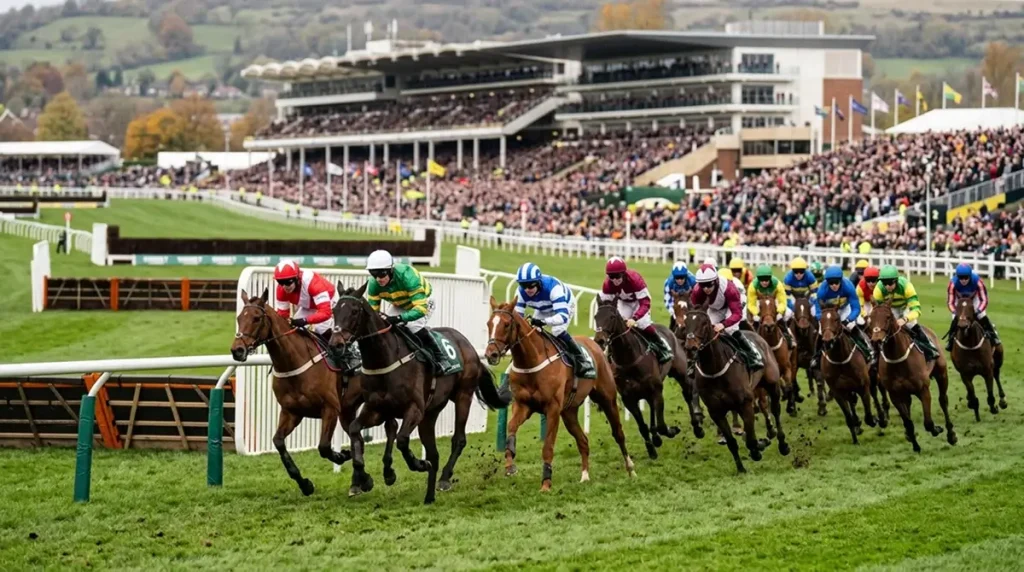
html
Contents
One horse you’d defend in court
The biggest single Trifecta dividend in British racing history landed at the Coventry Stakes at Royal Ascot in 2026 – £122,667.10 to a £1 unit on an 80/1, 40/1, 50/1 finish. Nobody’s banker-bet structure caught that. The 1-2-3 was three outsiders nobody had on a slip. The lesson isn’t that bankers don’t work – the lesson is that bankers work everywhere except the races where the result is genuinely random, and the dividend for spotting the random ones is so disproportionate that you don’t need to hit them often.
The banker Trifecta is the discipline of identifying one horse you’d defend in front of a panel of bookmakers – one runner whose ability, fitness, draw, ground, jockey, and field-fit are all aligned, and around whom you build a Trifecta structure that pays out provided your banker finishes in a specific position. It is, in my view, the single most efficient way to bet the Trifecta on big-field handicaps at the major festivals, and it’s the architecture I’ve used to take most of my own meaningful returns out of the British Trifecta pool over the past decade.
This piece sets out the rules I use for banker selection, the field conditions that suit banker bets, the staking maths that govern ticket cost, and the risks the structure exposes you to that a box bet doesn’t.
The rules for what counts as a banker
A banker isn’t the favourite. That’s the first thing to understand. Favourites win roughly a third of British races and finish in the frame somewhat more often, but those rates aren’t high enough to justify locking a Trifecta around them. A banker, in the disciplined sense I use the word, is a runner with three concurrent properties: a verifiable form profile that maps onto the specific race conditions, a price that doesn’t reflect those conditions properly, and a finishing pattern that fits the predicted pace shape.
Take a typical Festival handicap. Twenty-two runners, eight or nine of them realistically capable of winning on their best form, four or five capable on their second-best. The banker isn’t the 4/1 favourite – the favourite carries top weight, has been seen by every form-reader in Britain, and the price reflects the consensus. The banker is the 12/1 third-favourite whose recent form is plain but who’s well drawn, on his preferred ground, with a riding arrangement that fits the race shape. That horse isn’t priced as the favourite because the market hasn’t done the work. He’s a banker because you have.
The banker also has to be a horse you’d bet to win regardless. If you wouldn’t put a four-figure stake on the runner to win, you have no business making him the locked leg of a Trifecta. The banker bet is concentrated conviction. If the conviction isn’t there, the structure collapses.
The field conditions that suit banker bets
Banker Trifectas work in big fields and break in small ones. The reason is purely combinatorial – in a fifteen-plus runner handicap, locking one leg of the Trifecta reduces the combinations you need to cover from 2,730 (the unrestricted Trifecta count for 15 runners) to 182 (combinations consistent with your banker finishing first), a 93% reduction in ticket cost. In a small field of eight runners, locking one leg reduces combinations from 336 to 42, an 87.5% reduction – still substantial, but the absolute saving is smaller and the dividend is correspondingly thinner.
Big-field handicaps are also the races where bookmakers find Tricast pricing most uncomfortable. The Tote pool absorbs more of the public’s money on these races because the Tricast at 22-runner advertised prices is rarely competitive, and the Trifecta pool deepens accordingly. The average UK Trifecta dividend already runs at around £153 per £1 unit, with the bigger figures heavily concentrated in big-field handicaps where the third placing is genuinely contested by half the field.
The current British field-size profile makes this worth restating. H1 2026 averaged 8.43 runners per race across all British racing – the second-lowest figure since 1995. Q3 2026 dropped the Core Flat average to 8.54 and Core Jumps to 7.63. The big-field handicap is becoming structurally rarer. The races that still meet the criteria – the major Festival handicaps, the Saturday cards at the bigger meetings – therefore concentrate the available Trifecta value into a smaller part of the calendar. Banker discipline is what lets you extract value from those races without overpaying for the privilege.
The staking maths
A banker Trifecta is priced as the number of permutations consistent with the banker finishing in your nominated position, multiplied by the unit stake. If your banker is locked into first place and you’ve selected four anchors for second and third, the calculation is 4 multiplied by 3 – twelve permutations, twelve unit stakes. At the 10p Tote unit with £2 minimum bet that’s a £1.20 ticket. At a £1 unit it’s £12. Scale the anchors and the cost rises arithmetically. Five anchors with the banker first: 5 multiplied by 4 = twenty permutations, £2 at the 10p unit, £20 at the £1 unit.
If you don’t lock the banker to first place – if you allow him to finish anywhere in the top three with your nominated supporting cast – the calculation expands. A banker “to-place” in the Trifecta across four anchors is 3 multiplied by the permutations of the remaining two placings from the four anchors, which is 3 × 4 × 3 = 36 lines. The flexibility of allowing the banker to finish second or third triples the ticket cost.
My usual approach on a Festival handicap is banker-to-win with five anchors, total ticket cost £2 at the 10p Tote unit (twenty lines at 10p). On the rare race where the banker is plainly capable of winning but the field structure means he might finish second behind a longer-priced rival, I’ll switch to banker-to-place with four anchors, total ticket cost £3.60 (thirty-six lines at 10p). The cost discipline matters. Banker bets that drift into £20 territory are no longer banker bets – they’re disguised boxes with extra steps.
The risk profile that the banker introduces
The structural risk of the banker Trifecta is obvious and severe. If the banker doesn’t run his race – finishes fourth, falls, gets cut up at the half-furlong marker, runs flat for unspoken reasons – the bet is dead. Every penny on the ticket is lost. The 75% redistribution of the Tote pool that produced the £122,667.10 record dividend on the Coventry Stakes in 2026 paid only the slips that had picked the actual 1-2-3, and any banker bet on that race was wasted paper.
The bet’s expected return therefore rests on two probabilities: the probability that the banker finishes in the nominated position, and the conditional probability that the chosen anchors fill out the remaining placings given the banker has performed. Multiply those two and you have the bet’s strike rate. The banker has to be strong enough on the first probability to make the whole structure positive-expectation against the 25% Tote pool deduction. That bar is higher than most punters think – typically a 35%-plus probability of the banker finishing in the nominated position, depending on the field size and the dividend distribution.
The compensating advantage is that when the bet works, it usually works at a price that more than covers the runs where it didn’t. The dividend asymmetry in pool betting rewards exactly the kind of concentrated conviction that the banker structure represents. A 1,011-race Trifecta-versus-Tricast study showing the Tote pool wins 80% of the time, with an average outperformance of about 26%, is broadly the kind of edge banker bets exploit in concentrated form.
For the wider context of how banker, box, and key structures combine across the Trifecta menu, the explainer on Trifecta box, key, and banker structures in UK racing goes deeper into the comparative maths.
The Trifecta as a sniper’s bet
The Trifecta is sometimes sold as a fun bet, the kind of thing you have on the Grand National and forget about for a year. That description is fine for the once-a-year racegoer. For anyone treating the Trifecta as a serious instrument, the banker bet is the closest thing to a sniper’s tool the pool offers. One race, one conviction, one structure designed around one horse, and a payout profile that asymmetrically rewards being right on the leg you locked. Used disciplined, on the right kind of big-field handicap, with the banker chosen properly and the anchors built around predicted pace, the bet earns its place at the top of the Trifecta menu. Used as a default it’s no better than a box. Used on the wrong race it’s worse than not betting at all.
